
Navigating the Future of Interiors with Emerging Technologies
· Technology · By Designo Interiors
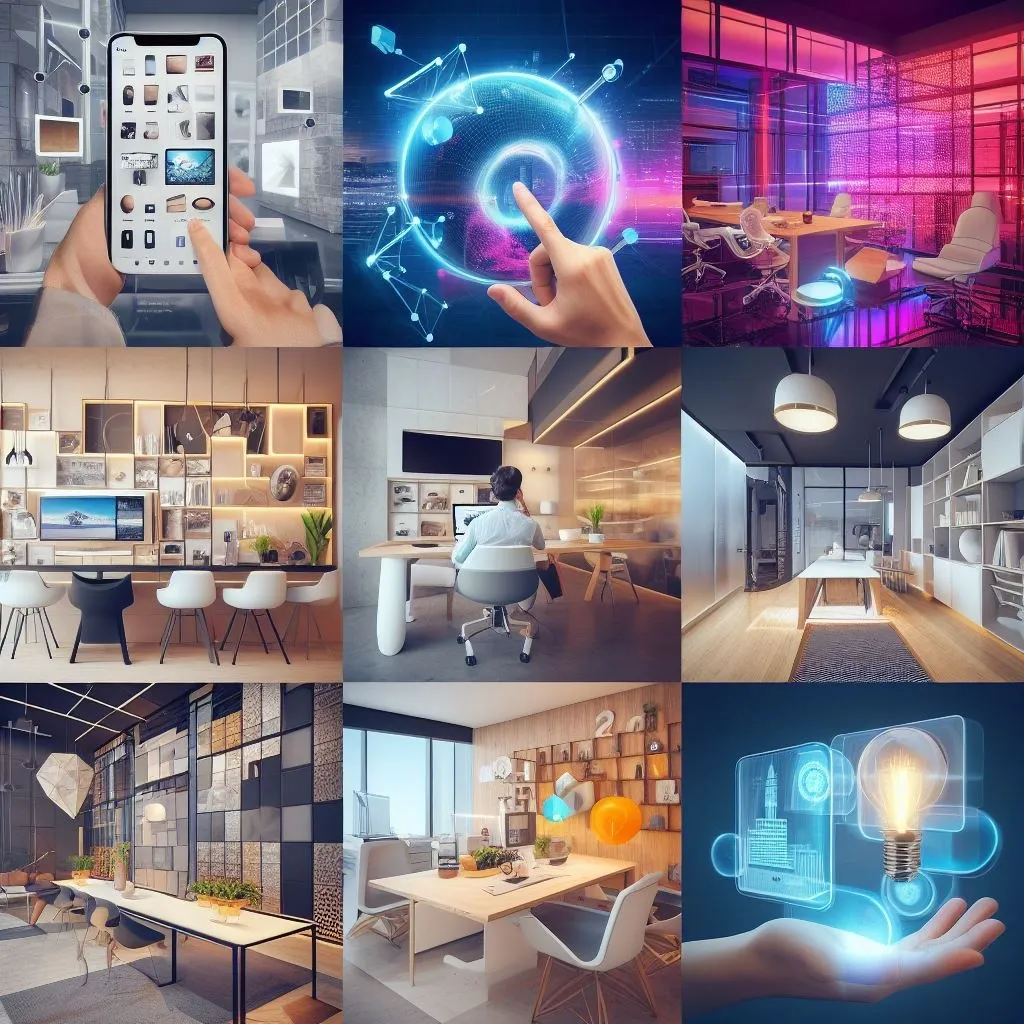
The interior designing industry is constantly evolving and adapting to the changing needs and demands of the society, the environment, and the economy. In order to create more beautiful, functional, and sustainable spaces, interior designers and executors need to embrace new technologies that can enhance their design process and outcomes. In this blog, we will explore some of the most exciting emerging technologies in the interior designing and execution industry in 2023, and how they can benefit both the professionals and the clients.
Design Apps
Design apps are mobile applications that allow interior designers and executors to create, edit, and share their design ideas and plans on their smartphones or tablets. Design apps can improve the efficiency, accuracy, and convenience of design, as well as enable more collaboration and communication among different stakeholders. Design apps can also provide various features and tools such as 3D modeling, rendering, measurement, annotation, color selection, material selection, furniture selection, lighting simulation, budget estimation, and more.
Virtual Reality/Augmented Reality
Virtual Reality (VR) / Augmented Reality (AR) are immersive technologies that create simulated or enhanced environments that can be experienced through headsets or mobile devices. VR / AR can enable interior designers and executors to visualize their designs in a more realistic and engaging way, as well as interact with them in real time. VR / AR can also facilitate collaboration and communication among different stakeholders, as well as improve user participation and feedback.
3D Printing
3D printing is a fabrication technique that uses additive manufacturing to create physical objects from digital models by depositing layers of material on top of each other. 3D printing can enable interior designers and executors to create more complex and customized shapes and structures that are otherwise difficult or impossible to produce with conventional methods. 3D printing can also reduce material waste, transportation costs, and execution time.
Switchable “Smart” Glass (Privacy Glass)
Switchable smart glass is a special glass that changes from transparent to opaque when with a switch flip. It’s an upscale, high-tech privacy option for decorators that can eliminate the need for blinds. Interior designers recommend this tech innovation for its ability to provide thermal, sound, and solar insulation benefits. By using switchable smart glass, clients can control the flow of light between rooms or outside sources and can dial in preferences ranging from fully translucent to near black-out conditions. This glass is perfect for spaces that need privacy, such as bathrooms, changing rooms, conference rooms, and safe-deposit rooms. To make a room more aesthetically pleasing, interior designers can even use colored switchable glass.
Case Study: A Modern Office Space in Mumbai
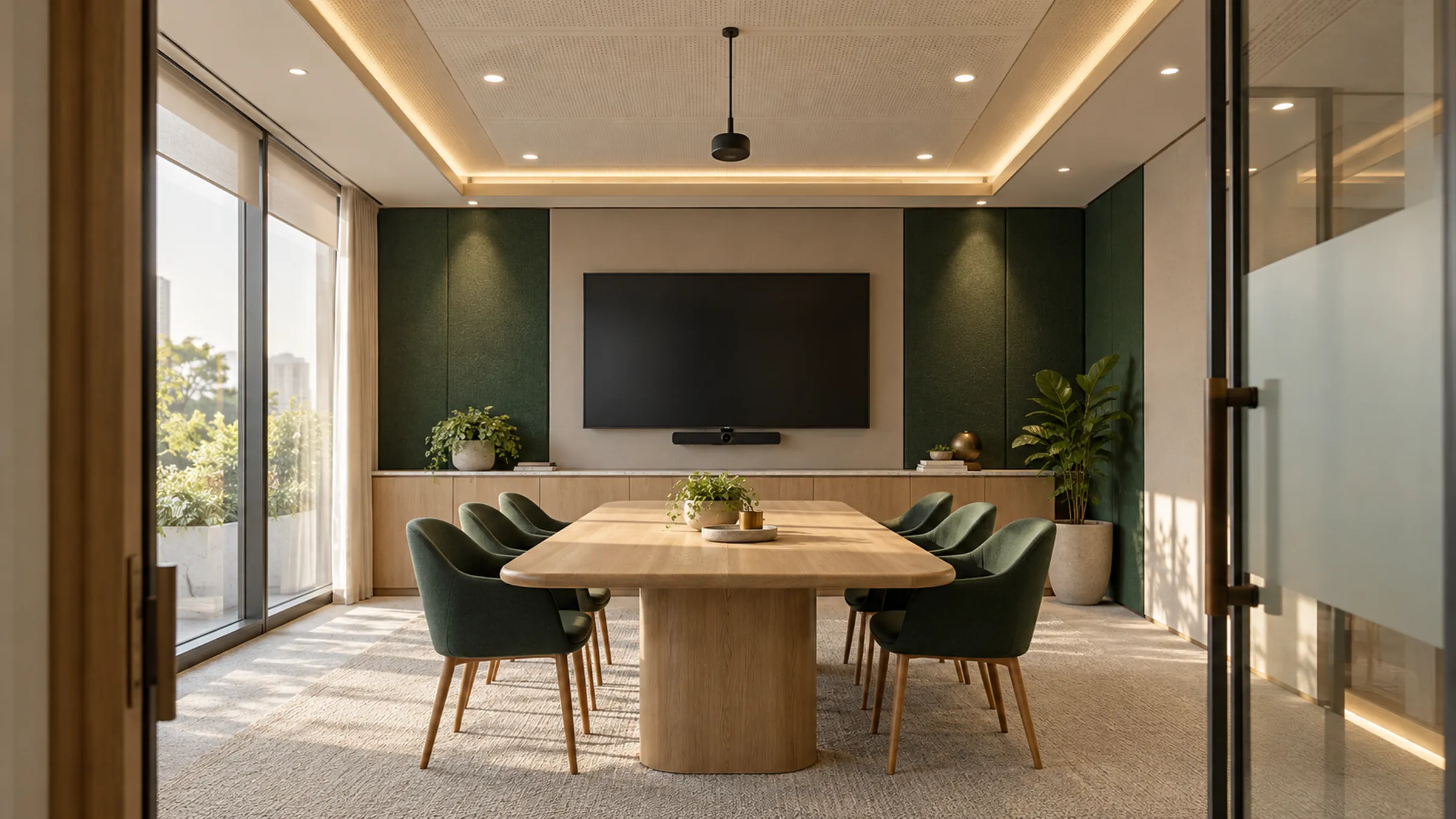
To illustrate how these emerging technologies can be applied in practice, we will present a case study of a modern office space that we designed and executed for a client in Mumbai. The project brief was to create a flexible and adaptable workspace that could accommodate different functions and needs of the client’s employees, as well as reflect their brand identity and values.
We used design apps to create a comprehensive digital model of the office space that integrated all the information from different disciplines such as architecture, interior design, furniture design, lighting design, and branding. We used design apps to coordinate and communicate with all the stakeholders throughout the project lifecycle, as well as to perform various analyses and simulations such as space planning, ergonomics, acoustics, and energy efficiency.
We used VR / AR to visualize and present our design to the client and the users in a more realistic and engaging way. We used VR / AR to interact with our design in real time and test different scenarios and alternatives. We used VR / AR to facilitate collaboration and communication among different stakeholders, as well as to improve user participation and feedback.
We used 3D printing to fabricate some of the office’s components such as the partitions, the signage, the lighting fixtures, and the accessories. We used 3D printing to create more complex and customized shapes and structures that were otherwise difficult or impossible to produce with conventional methods. We used 3D printing to reduce material waste, transportation costs, and execution time.
We used switchable smart glass to create a dynamic and versatile office environment that could adapt to different needs and preferences. We used switchable smart glass to create a transparent and open office space that could foster collaboration and communication, as well as a private and secluded office space that could ensure confidentiality and concentration. We used switchable smart glass to create a colorful and lively office space that could reflect the client’s brand identity and values.
The result was a modern office space that met the client’s expectations and requirements, as well as provided a comfortable and productive workspace for the employees. The office space achieved a high level of performance and efficiency, as well as received positive feedback from the users and the public.
Conclusion
The interior designing and execution industry is facing many challenges and opportunities in the 21st century, such as climate change, urbanization, globalization, digitalization, and social transformation. In order to cope with these changes and create more beautiful, functional, and sustainable spaces, interior designers and executors need to embrace new technologies that can enhance their design process and outcomes. In this blog, we have discussed some of the most exciting emerging technologies in the interior designing and execution industry in 2023, such as design apps, VR / AR, 3D printing, and switchable smart glass. We have also presented a case study of a modern office space that we designed and executed for a client in Mumbai using these technologies. We hope that this blog has inspired you to learn more about these technologies and how they can benefit your projects.
If you are looking for an interior design company that can help you with your interior designing and execution projects using these technologies, look no further than Designo Interiors. We are a leading interior design company based in Mumbai that specializes in creating innovative and sustainable solutions for commercial clients. We have a team of experienced and skilled professionals who can handle any project from concept to completion. We use the latest technologies and tools to deliver high-quality results that meet your needs and expectations. Contact us today to find out how we can help you with your interior designing and execution projects.
More on this: Workplace technology